01 — Challenge
Organizations needed advanced analytics capabilities that combined enterprise-grade compliance, massive scale, and cloud flexibility.
While Apache Spark offered superior performance over Hadoop with support for multiple programming languages (Scala, Java, Python, R, SQL) and simplified programming, customers struggled with complex setup, siloed teams, and lack of collaboration.
Existing big data solutions forced organizations to choose between analytical power and ease of use, creating friction between technical and business users.
The market opportunity was clear: customers needed a unified platform that used Databricks while providing the security, compliance, and native Azure integration that enterprises required.
02 — Solution
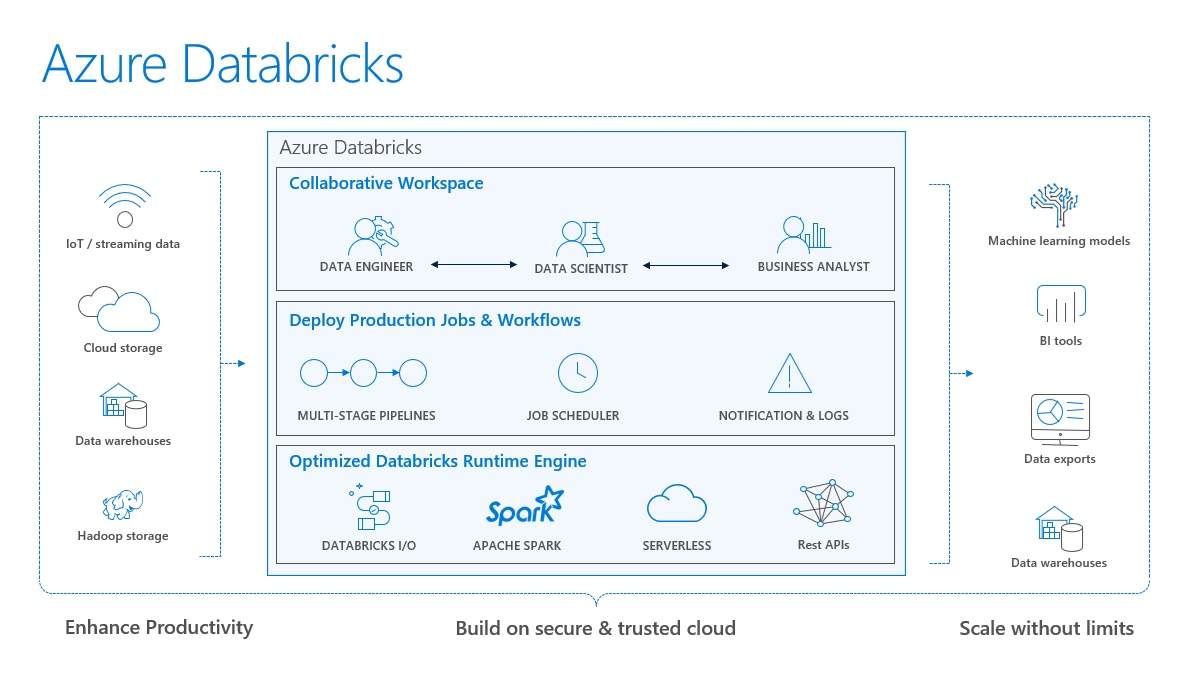
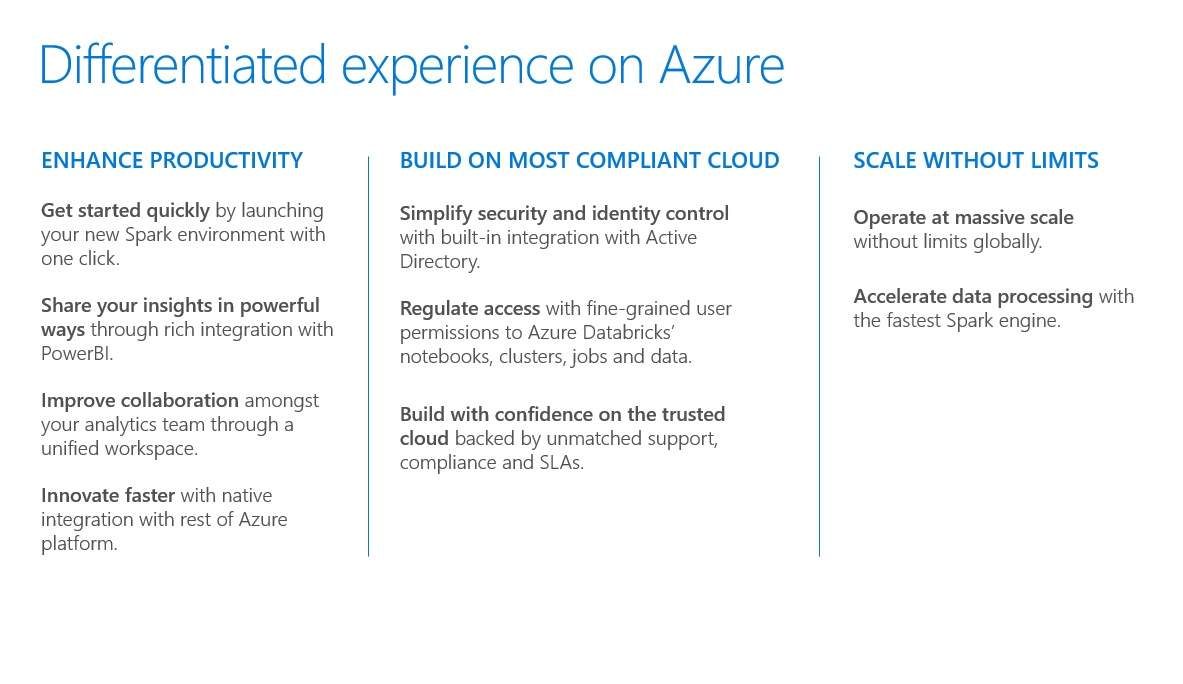
I developed messaging and sales enablement for Azure Databricks, a collaborative Apache Spark-based analytics platform optimized for Azure. The positioning emphasized three key differentiators: simplicity with one-click cluster setup and serverless infrastructure that eliminated operational complexity, collaboration through interactive workspaces where data scientists, engineers, and analysts could work simultaneously on shared notebooks with real-time editing, and enterprise readiness with native Azure integration (Power BI, SQL Data Warehouse, Cosmos DB, Blob Storage) plus enterprise-grade security including Active Directory integration and compliance certifications.
I created persona-specific messaging for three audiences. Data engineers received messaging focused on improved ETL performance with zero-management clusters and production job scheduling. Data scientists were positioned around easy data exploration in interactive notebooks with support for R, Python, Scala, and SQL. Business analysts heard about interactive dashboards and Power BI integration enabling dynamic reporting without coding.
I developed comprehensive sales enablement including demo scripts, pitch decks highlighting use cases for modern data warehousing, advanced analytics, and real-time analytics, and technical documentation emphasizing serverless auto-scaling and optimized I/O performance.
03 — Impact
The launch drove a 23% increase in account upsells among existing Azure customers, as organizations added Databricks to expand their analytics capabilities.
The unified platform messaging successfully positioned Azure Databricks as the bridge between technical and business teams, making advanced analytics accessible across organizations while maintaining enterprise security standards.