01 — Challenge
An early-stage startup that began as a note-taking app, struggled to find product-market fit by attempting to sell to everyone.
The company recognized a widespread professional pain point: brilliant meeting discussions and diligent note-taking failed to translate into actionable outcomes, leaving insights buried in documents and momentum stalled.
However, their positioning as a passive note-taking tool didn't capture their true capability—transforming notes into intelligent action through AI agents.
Without clear customer segmentation or an ideal customer profile, they couldn't effectively target their messaging, prioritize product features, or achieve efficient customer acquisition.
The startup needed to move beyond broad positioning to identify who would derive the most value from AI-powered workflow automation and be willing to pay for it.
02 — Solution
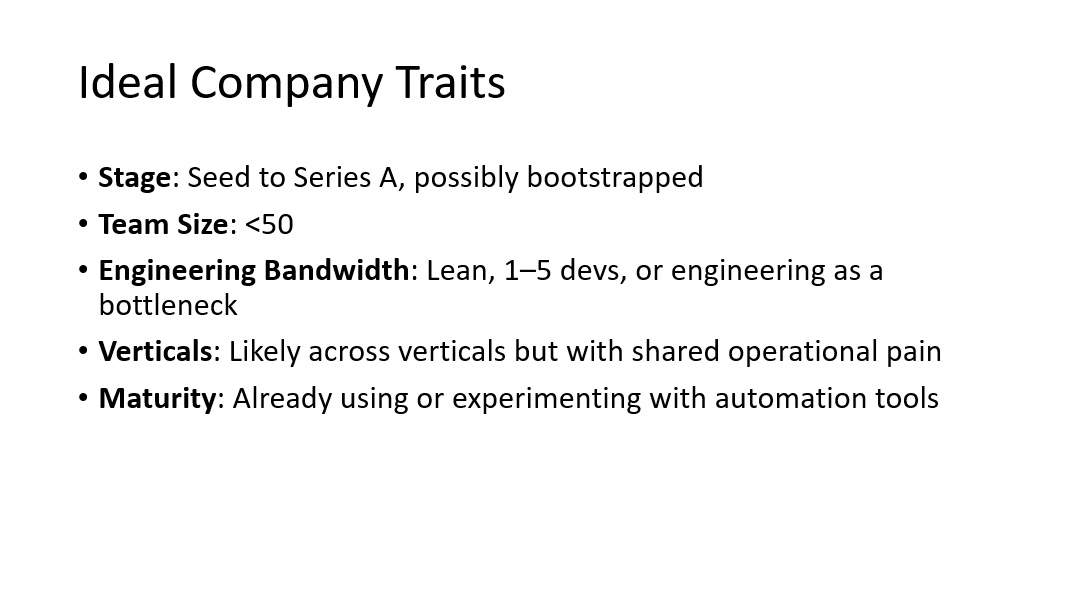
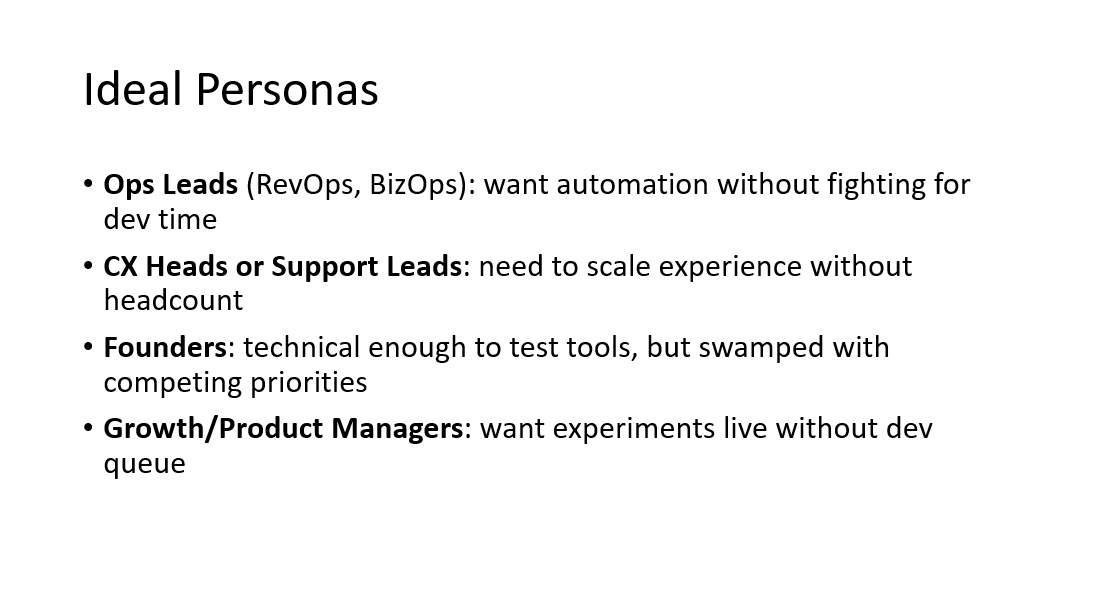
I conducted research analyzing recorded user interactions and in-app usage data to identify distinct customer segments and define the ideal customer profile.
The analysis revealed two primary segments: small and medium businesses needing process automation, and high-growth tech startups seeking intelligent workflow solutions.
Based on these insights, I recommended repositioning from "note-taking" to "smart real-time insights" and renaming the company to better represent their AI agent capabilities.
I created three key deliverables: an ICP documentation framework detailing firmographics and behavioral triggers, a market segmentation strategy differentiating between SMB automation needs and startup intelligence requirements, and a go-to-market strategy including founder-led thought leadership on LinkedIn and a build-in-public approach to establish credibility with the technical founder audience in their ICP.
03 — Impact
Within three months of implementing the ICP framework and repositioning, the company achieved an increase in new customer sign-ups and a 20% increase in app usage.
The focused targeting enabled more efficient customer acquisition concentrated in the ICP segment, while the repositioning from passive note-taking to intelligent AI agents clarified the value proposition for high-growth startups seeking workflow automation.